Tucked into Uganda’s remote, rugged northeastern corner, bordering South Sudan and Kenya, Kidepo Valley National Park is routinely named among the most beautiful parks in Africa by those who have actually made the journey there — and consistently among the least visited, simply because of how far it lies from everything else. For travelers willing to make the trip, the reward is a vast, untouched wilderness that feels closer to the Africa of a century ago than almost anywhere else on the continent.
A Landscape Unlike the Rest of Uganda
Kidepo’s scenery sets it apart immediately from Uganda’s lusher southern and western parks. Here, semi-arid savannah stretches toward dramatic mountain backdrops — the Morungole Mountains to the south and the Napore and Lotuke ranges along the Sudanese border — creating some of the most cinematic vistas in East Africa. The Narus and Kidepo valleys, which give the park its name, run dry for much of the year, concentrating wildlife around the remaining waterholes during the dry season in spectacular, easy-to-watch numbers.
Wildlife Found Nowhere Else in Uganda
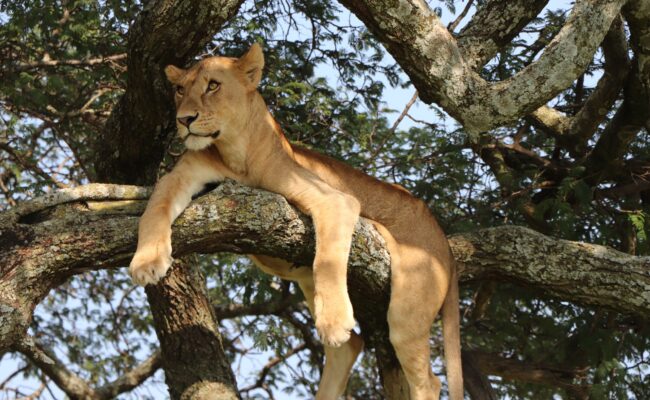
Kidepo’s isolation has preserved species found in no other Ugandan park: cheetah, the bat-eared fox, and striped hyena all live here and nowhere else in the country. The park also holds large herds of buffalo, Burchell’s zebra, eland (Africa’s largest antelope), and a healthy lion population, alongside elephant, giraffe, and leopard. Birders are similarly rewarded, with over 475 recorded species, including ostrich and several raptors rarely seen elsewhere in Uganda.
The Narus Valley
During the dry season (roughly September to March), the Narus Valley becomes the park’s prime game-viewing circuit, as animals concentrate around the remaining water sources in scenes reminiscent of the Serengeti at its most concentrated — without another vehicle in sight. It is not unusual to watch a lion pride, a herd of buffalo, and a tower of giraffe all from the same vantage point, with zero competition from other tourists.
Cultural Encounters with the Karamojong
The region surrounding Kidepo is home to the Karamojong, semi-nomadic pastoralists whose traditional dress, cattle culture, and way of life remain distinct from the rest of Uganda. Guided visits to a local Karamojong village, often arranged through community-based tourism initiatives, offer a respectful and genuinely illuminating window into a culture that has retained its traditions more fully than almost any other community in East Africa.
Getting There
Kidepo’s remoteness is both its defining challenge and its greatest asset. The overland drive from Kampala takes roughly 10–12 hours, which is why most visitors opt for the scheduled or chartered flight from Entebbe to the park’s Kidepo airstrip, a journey of around 1.5–2 hours. The flight itself, tracing the edge of Karamoja’s mountain ranges, is a highlight in its own right.
Best Time to Visit
The dry season, from September through March, is the strongest window for game viewing, as wildlife clusters around dwindling water sources in the Narus Valley. The wetter months bring green, dramatic scenery and excellent birding, though wildlife disperses more widely across the park.
Where to Stay
Accommodation inside and around Kidepo is limited compared to Uganda’s more popular parks — a handful of lodges and tented camps cater to visitors, reinforcing the sense of exclusivity that defines a Kidepo safari. Advance booking is essential given the limited capacity.
Why Kidepo Is Worth the Journey
Kidepo Valley rewards travelers who want Africa at its rawest: dramatic mountain scenery, wildlife unique within Uganda, a living pastoralist culture, and the rare, increasingly precious experience of having an entire national park largely to yourself. For those who have already done the classic southern circuit and are looking for something genuinely different, Kidepo is Uganda’s best-kept secret — for now.

 English
 Dutch
Dutch Japanese
 Korean
 Chinese