English
 Dutch
Dutch Japanese
 Korean
 Chinese
The Best Mountain Getaways for Nature Lovers.
Discover the best mountain getaways for nature lovers, where breathtaking landscapes.
Straddling the border between Uganda and the Democratic Republic of Congo, the Rwenzori Mountains rise in a jagged, glacier-capped wall that ancient geographers believed concealed the source of the Nile. The 2nd-century astronomer Ptolemy is said to have referred to them as the “Mountains of the Moon,” and the name has stuck for nearly two thousand years. Today, this UNESCO World Heritage Site offers East Africa’s most demanding — and most rewarding — high-altitude trek outside Kilimanjaro and Mount Kenya.
The Rwenzori range is home to Margherita Peak on Mount Stanley, standing at 5,109 metres — making it Africa’s third-highest summit after Kilimanjaro and Mount Kenya, and notably the only one of the three requiring technical climbing skills, including glacier travel and rock scrambling, to reach its true summit. Unlike the volcanic cones of Kilimanjaro or Kenya, the Rwenzoris are a genuine fault-block mountain range, with six distinct snow-capped peaks and some of the last remaining glaciers in Africa, though these are retreating rapidly due to climate change.
What makes a Rwenzori trek extraordinary isn’t only the summit — it’s the journey through dramatically shifting vegetation zones along the way: montane forest giving way to bamboo, then heather, then the surreal “Afro-alpine” giant lobelia and groundsel zone, before finally reaching the rock and ice of the upper peaks. Few treks anywhere in the world pack this much ecological transformation into a single multi-day route.
Two main routes lead into the range:
Reaching Margherita Peak itself requires roped glacier travel and basic mountaineering technique, and is typically undertaken with specialist mountain guides — this is a serious trek, not a casual hike, and proper acclimatisation and fitness preparation are essential.
The lower forested slopes of the Rwenzoris support several primate species, forest elephants, and over 200 bird species, including the handsome francolin and several species found only in this part of the Albertine Rift. The range’s isolation has made it a centre of endemism, with numerous plant and animal species found nowhere else on the planet.
The Rwenzoris receive rainfall year-round, true to their nickname, but the driest — and therefore most favourable — windows fall in mid-December to mid-February and June to August. Outside these windows, trails can become significantly muddier and more challenging.
The Rwenzori foothills lie near Kasese, roughly 6–7 hours by road from Kampala, and conveniently close to both Queen Elizabeth National Park and Kibale Forest — allowing trekkers to combine a multi-day mountain expedition with primate tracking and game viewing on the same trip.
This is a destination for travelers seeking genuine physical challenge and remote, otherworldly scenery rather than a typical safari add-on. The shorter circuits suit fit, adventurous hikers wanting a multi-day wilderness experience, while the full summit attempt on Margherita Peak is best reserved for those with prior mountaineering or glacier experience, undertaken with an experienced local guiding outfit.
Overshadowed in popularity by Kilimanjaro, the Rwenzori Mountains offer a wilder, far less crowded, and arguably more visually extraordinary trekking experience — glaciers on the equator, giant lobelias rising through Afro-alpine mist, and a sense of genuine remoteness that’s increasingly hard to find on Africa’s more famous peaks.
A curated list of the most popular travel packages based on different destinations.
Discover the best mountain getaways for nature lovers, where breathtaking landscapes.
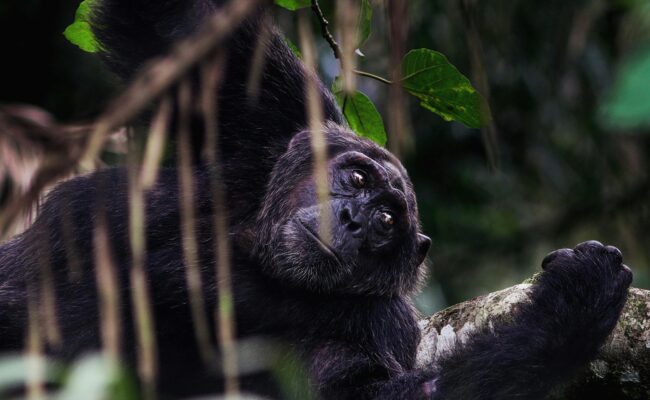
While Bwindi belongs to the gorillas, Kibale Forest National Park belongs to the chimpanzees — and to twelve other primate species that share its canopy. Tucked into the rolling hills of western Uganda between Fort Portal and Queen Elizabeth National Park, Kibale holds the highest concentration and diversity of primates anywhere in East Africa, earning […]
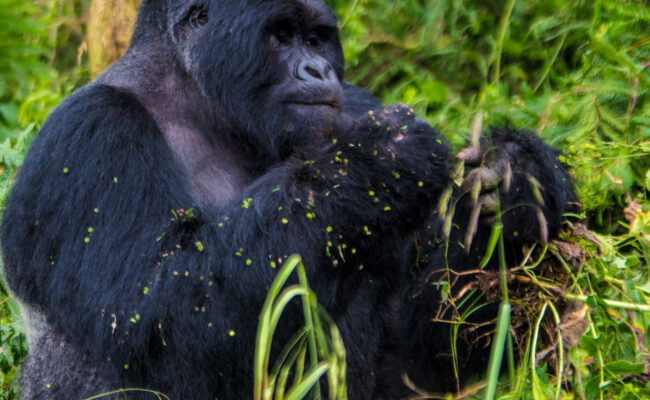
There are very few wildlife encounters left on Earth that can genuinely be called life-changing. Locking eyes with a 200kg silverback mountain gorilla in the misty undergrowth of Bwindi Impenetrable National Park is one of them. Uganda is home to roughly half of the world’s remaining mountain gorillas, and Bwindi — a UNESCO World Heritage […]
Uganda’s wildlife and landscapes get most of the attention, but a smooth trip starts with the practical details — visas, vaccinations, timing, and logistics. Here’s a clear, up-to-date overview to help you plan with confidence. Do You Need a Visa? Most travelers need a visa to enter Uganda. As of 2026, Uganda no longer offers […]
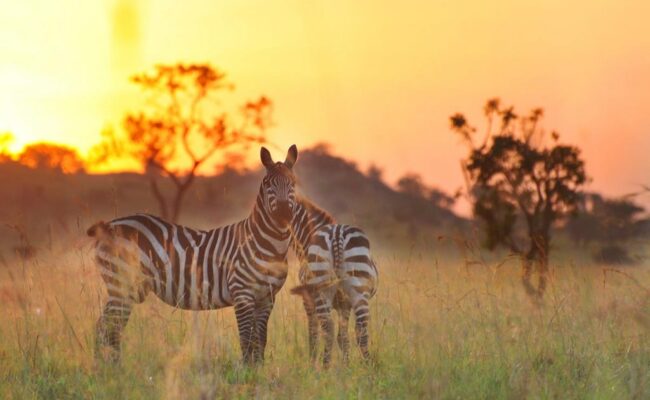
Tucked into Uganda’s remote, rugged northeastern corner, bordering South Sudan and Kenya, Kidepo Valley National Park is routinely named among the most beautiful parks in Africa by those who have actually made the journey there — and consistently among the least visited, simply because of how far it lies from everything else. For travelers willing […]
With over 1,060 recorded bird species packed into a country roughly the size of the United Kingdom, Uganda holds one of the highest bird counts of any country on Earth — more than the whole of South Africa, despite being a fraction of its size. For birders, this density, combined with Uganda’s position straddling both […]
Discover the best mountain getaways for nature lovers, where breathtaking landscapes.
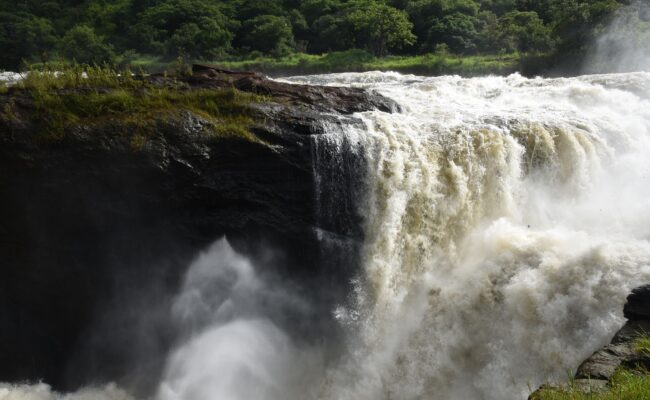
Few natural sights in Africa hit with the sheer physical force of Murchison Falls. Here, the world’s longest river — the Nile — is squeezed from a width of over 50 metres down to just 7 metres before exploding through a narrow rock gorge and plunging 43 metres into the Devil’s Cauldron below. The roar […]